The past few months have been wild for the tech industry. Since 2022, we’ve lost over 240,000 jobs, with another 100,000 added last month (March 2023). The sector is facing many challenges, including the economic downturn caused by COVID responses, investor pressure, overhiring, and even the collapse of some banks. These things (and more) are causing havoc on an industry that has felt invincible for over a decade.
While the industry at large is facing these challenges, those of us in marketing have seen this quarterly for years. It’s one area of the business that is constantly on the chopping block to cut costs or to justify spending.
Even though we marketers deal with the pressures of doing more with less or even doing more with none, today’s environment forces us to dig deep into our experiences to weather the storm.
On Friday, April 21, David Gerhardt, Founder, Exit Five, and three panelists (Shauntle Barley, Director of Marketing, Demandwell; Jason Widup, VP of Marketing, Metadata.io; Margaret Kelsey, Founder, TatCo) had an open discussion about the current state of affairs. They cover various topics, including aligning the marketing plan with senior leadership, the best places to squeeze efficiency in your campaigns, and even express disdain for marketing playbooks.
Key takeaways from the webinar:
Find alignment with your CEO/Founder: Marketing success depends on having a shared language with leadership and being aligned on high-level goals with the CEO so they know thewhy of your actions.
Revenue Focus and Reporting: Tie everything back to revenue and use the funnel to communicate. It’s the marketing leader’s role to execute the CEO’s vision, and you can prioritize the right behavior by focusing on velocity instead of reporting.
If a CEO asks you for more reporting, it’s an indicator that they don’t understand or don’t know what you’re doing.
Back to Basics: In a down economy, it’s important to focus on the marketing basics and experiment with what you can to improve efficiencies. Test and play with what you can: audience, offer, message/story, channel, CTA, content type, conversion app, and timings (day of the week/time of day) are all good areas to explore.
Scrappy Generalists: The world is shifting faster than we can move, so it’s important to hire scrappy generalists who can test messages, explore different channels and build things from scratch.
Growth Positions: Growth and Demand Gen are important positions in marketing, and it’s important to focus on existing customers, automate in the background with targeted accounts, and create a 2-way conversation to understand the value prop.
Playbooks Play it Safe: If you’re following a playbook, it means someone else is doing the same. They’re like parenting books. You should take things from them, learn from them, and then make it your own – but don’t count on one playbook as a silverbullet.
Exit Five is a subscription-based community of B2B marketers to share ideas and crowdsource questions and feedback. While this webinar is free to all, I recommend joining the group to further your marketing journey and education. What sold me on it was the idea that no one goes to school for B2B Marketing. This community is a place to geek out with those who share a passion for B2B marketing and learn from real examples.
When I was 22, I pretended to be married to get free ski lift tickets.
My wife’s name was Larissa. She was a pre-med student at the University of Houston. We met in undergrad. We were very much in love and very interested in owning a timeshare.
None of that was true.
I had just met Larissa the day before. She was a part of a larger group of us on the ski trip and friends of friends of someone I didn’t know.
Unfortunately, the timeshare company needed help identifying us as unlikely customers. They gave a compelling offer to anyone who walked by – including cheap 20-year-olds.
We wanted those free lift tickets, enough to pretend we were a couple interested in a timeshare and willing to sit through a 90-minute sales pitch.
Giving away those ski lift tickets was smart. Even though the timeshare folks didn’t know we didn’t want a timeshare, they made a bet that potential customers would talk to them because:
We were in Breckenridge, likely to ski
Ski lift tickets were expensive
The tactic worked. The timeshare company generated a lead, even if a bad one.
Suppose they knew who we were ahead of time? Or they asked the right questions when we walked into their sales office. In those cases, they would have moved us along.
They could have then spent their time with the actual customers in-market for a timeshare and lowered their customer acquisition costs by saving money on those lift tickets.
They could have asked, where are you staying?
If we were staying at One Skill Hill for the week, paying up to $75,000, we might have been an ideal target for purchasing a vacation property. However, if they knew that there were 8 of us sharing a king bed and pullout couch, they would have known we were not ideal.
Not an ideal timeshare customer
Or, they could have asked, how often do you go skiing?
If we traveled to the mountains often, purchasing a timeshare may have been a better value in the long run. But instead, they had no idea this would be my first and last time to willingly fall down a mountain.
Instead, this company was hungry for leads. It didn’t matter who they talked to as long as they booked the meeting to hit their meeting quota for the month.
Today, the timeshare company can do much better with the right technology. They can identify better customers, find out more about them, and engage them at each stage in the lifecycle.
A marketer at this company can get ahead of vacationers while planning their trip. For example, they could offer information about the area, guides about the best restaurants and nightlife, or even details on rising property values or projections for rising hotel costs.
The timeshare company could provide a lot of value to travelers. Once a relationship is built from relevant and helpful information, they might look at some of the timeshare properties. Suppose that happens and there is some interest. In that case, the company can further educate potential customers about the benefits of owning a timeshare with pricing calculators, quizzes, and surveys.
Sales could get involved if the vacationers signal that they’re interested in a timeshare. An introductory call could be made to secure a meeting. On the call, sales could use one of their high-value offers. Something like ski lift tickets, a voucher at an exclusive restaurant in the area, or something as basic as testimonials from other timeshare owners.
At this point, the vacationers see the company as an expert on the area. They have been nurtured through the process and are familiar with the offer. They may already have some ideas on how they’d afford the timeshare and maybe even be excited about it. And they will be willing to trade some of their vacation time to have a discussion with the company in exchange for their high-value incentive.
This may be how timeshares are sold now. It’s been a long time since that trip, and I was never an ideal customer for them anyway.
It got me thinking, though, how even with all of the technology available today, Marketers are still employing such basic campaigns and hoping for the best. They’ll do whatever they can to get the MQL to hit the monthly number, wasting time and resources.
Last week, this happened to me again.
I was included in a LinkedIn Conversation Ad campaign from a company offering a $100 Amazon gift card in exchange for a meeting with them.
Here’s what it said:
Hi Michael, I’d like to send you a $100 Amazon gift card!
I lead marketing at XXX a no-code platform that helps the fastest growing unicorns such as XXX and XXX create personalized experiences and increase leads by 3x.
I’m sure you’re feeling the pressure of generating revenue, so I’d love to show you how XXX can help. Take a meeting with us and I’ll send you a $100 Amazon gift card. Interested?
P.S. We have a limited number of gift cards available, so act fast!
There was a small thumbnail image of an Amazon gift card and a message that said, “Learn about XXX and get a $100 Amazon gift card.”
I know I got this message because of my job title, a company listed in my profile, or location. There was nothing personal about this primary data, especially since it was not supplemented by other data sources.
The opening hook is about getting a gift card. But, unfortunately, the closing line says the company only has a few gift cards to begin with. So, immediately, I was turned off.
The introductory line should have informed me about a problem I’m facing and what they can do about it.
Instead, kicking off by saying, ‘they help unicorn companies with personalized experiences to increase leads,’ doesn’t tell me anything.
They are vague in problem-solving. The way it is positioned “alleviate the pressure caused by generating revenue” isn’t relatable and isn’t written in a tone that feels personal or human.
I’d never be at dinner with friends and say, “you know what, this week I’ve felt a lot of pressure generating revenue. I wish someone could help me.” And if I did, it would be the last invite I got.
The last line finally delivers the ask: take a meeting with us and get a $100 gift card.
Even though the idea of getting a $100 Amazon gift card is enticing, I don’t know who this company is. I don’t know what they do.
I know that sitting through sales calls can be painful, even at the best of times. If I’m going to join one, I need to be in the market for the service they are addressing, and I already have a general sense of what they do. When I join sales pitches, I know the value I’ll be getting. I’m joining to ask questions and clarify any last-minute issues.
In this instance, joining a sales pitch without any context for a $100 Amazon gift card is less compelling than free ski lift tickets.
I didn’t click on the ad to potentially get the gift card.
Instead, I spent several days thinking about why this ad annoyed me.
What I would have done differently
The objective of their campaign was to generate meetings. But, similarly to the timeshare story, a meeting will only be worthwhile if you engage with the right customers.
If your first engagement is trying to land a sales meeting, it will not work. Especially today when B2B buyers get through 70% of the buying process without speaking to the sales.
Instead of running a campaign based off of specific job titles, locations, or company names, I would focus on identifying prospects showing buying signals. Have they visited my site or my competitor’s sites recently? And how often?
What type of information are they looking for? General information guides or pricing sheets? Do they currently have a solution in place or are they using a tool by a competitor raising prices? Are their actions on the site similar to other accounts that have recently closed?
Meeting someone with those characteristics defined will be much more valuable than meeting someone like me.
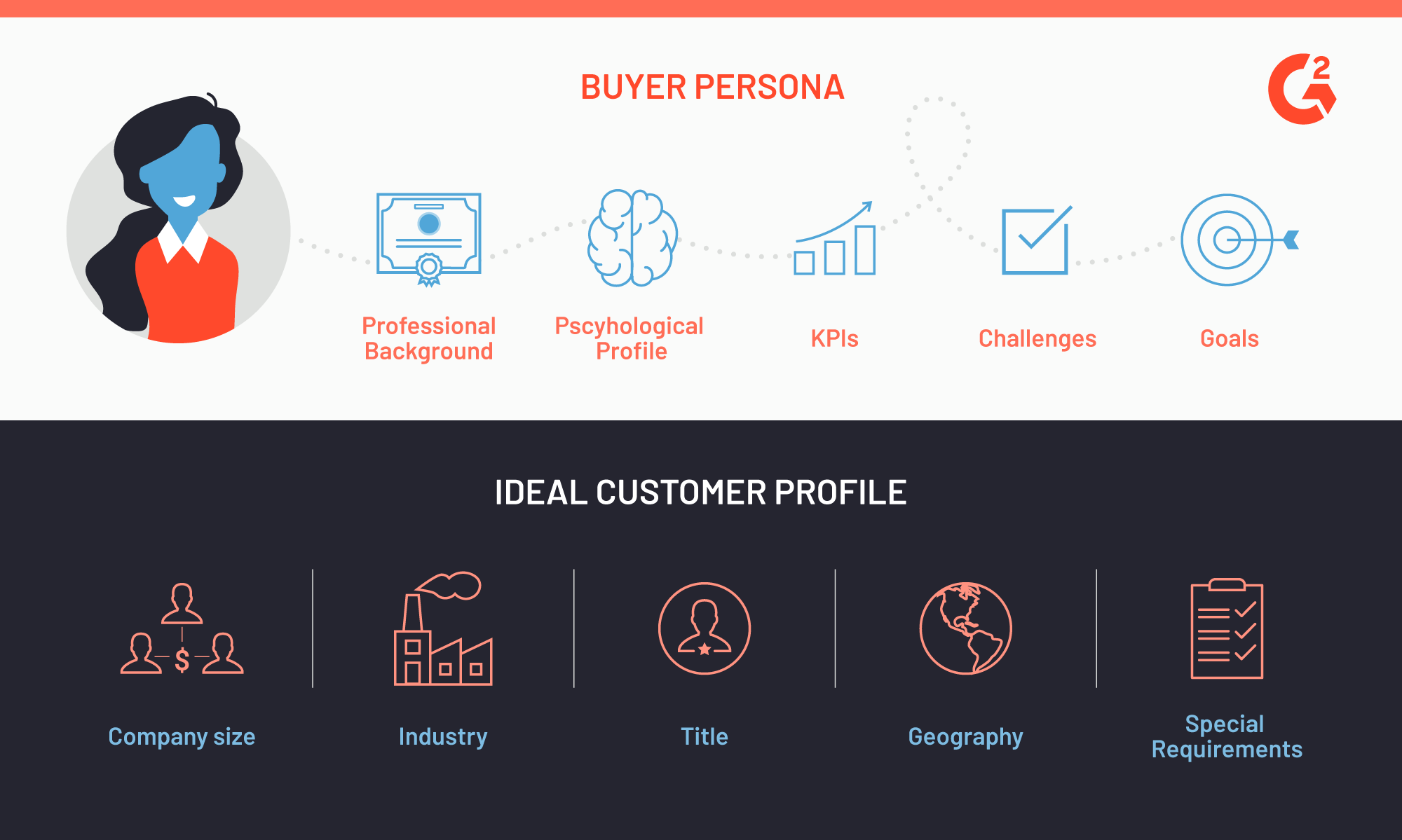
Today’s technology can build out detailed customer profiles and identify those most likely to purchase, all based on historical and AI-backed predictive data. With this in hand, a more relevant audience is engaged, and the likelihood is that the time your sales team spends with this person will convert into revenue.
An Amazon gift card might be a practical kicker to get a meeting if the potential customer is close to the conversion stage. However, it’s disconnected from the actual value of what the company is selling.
Instead, I would have offered a free trial, case studies, a buyer’s guide, or a consultation. That should be exciting enough if the prospect is ready to buy. However, it should deliver much better results than skipping past any time of nurture and going straight to a meeting.
Knowing your customer is critical whether you’re selling timeshares in Colorado or software services online. We’re finally at a point where marketing has the tools to do this. Now we can advise and develop data-backed strategies to make the entire lifecycle journey efficient and enjoyable. So let’s start doing it.
Larissa and I didn’t make it as a couple. In fact, I never saw her again after that trip. Although, according to her socials, she’s a very successful doctor. I hope that the experience of sitting through a timeshare pitch to get free ski lift tickets helps frame issues in her career as much as it does mine.
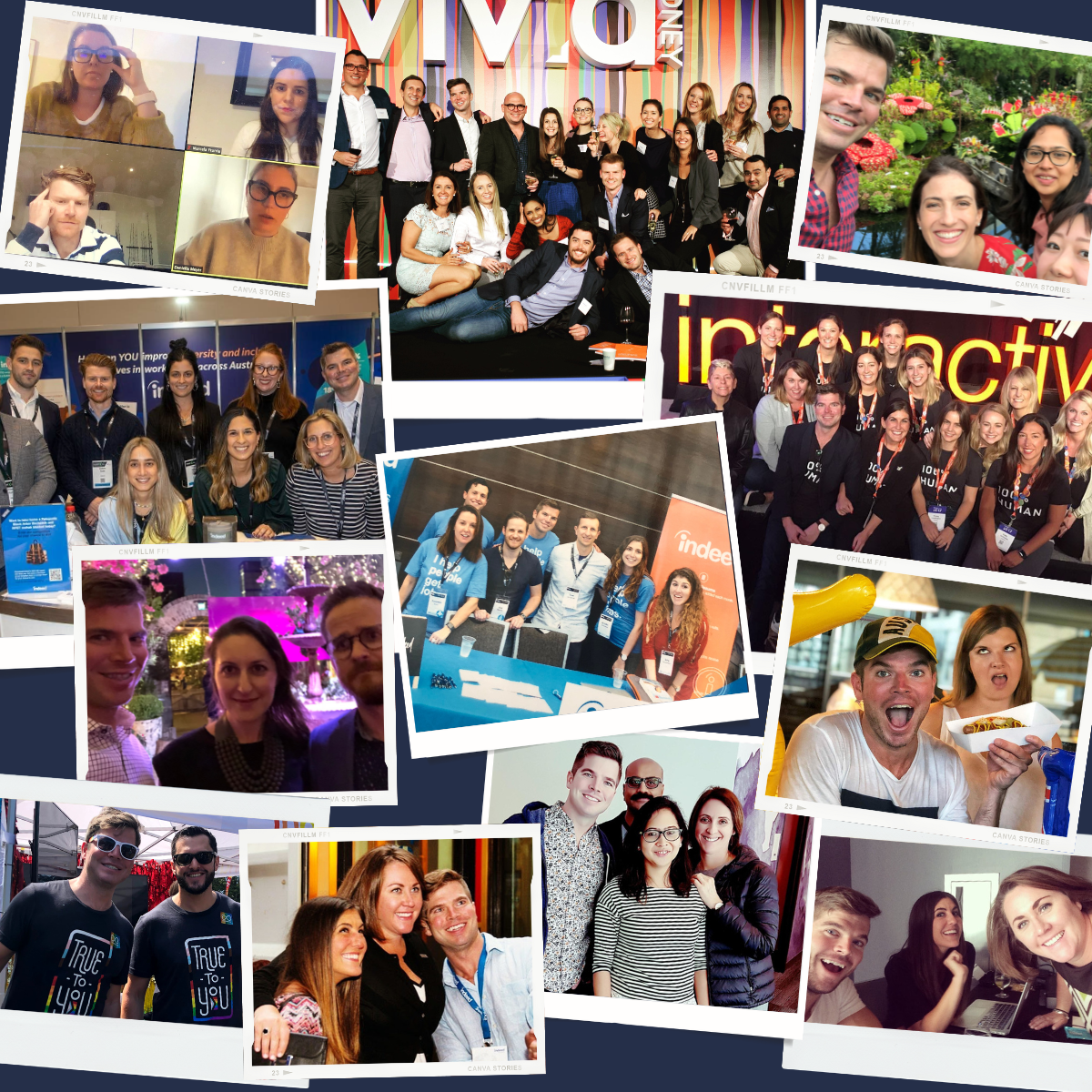
On my first day at Indeed, in January 2014, the entire marketing team could fit together in one conference room. On my last day, in October 2022, the entire marketing team could only fit in a conference hall, maybe.
I joined to create a global roadshow program (Explore). Explore pushed me out of my comfort zone and created an endless supply of awkward situations and great memories. Some highlights: being threatened by the fire marshall at The Shard in London for having too many people, staying at the Westin in Melbourne so I could bump into Pettifluer from the Real Housewives of Melbourne, desperately trying to get name badges printed in Munich with no German skills, starting one day by waking up in the forest in California (I was camping) and ending it after dinner with clients in Belgium.
It was fast. It was intense. It was stressful. It was awesome.
Then my dad got sick.
His cancer came on quickly and we weren’t prepared for it. I bring this up to show how much Indeed cares about its people. Indeed let me move back to Houston to help take care of him and support my mom in his last few months. There were no questions asked, no having to write out detailed coverage plans, no having to sit through business-as-usual meetings and then pivoting to make funeral arrangements – but it could have been. And it is like that for a lot of people. Indeed – and Charlotte – took care of me so I could take care of my family, and I will not ever forget that.
Then in 2018, Indeed moved me to Australia for a new role. In Sydney, my marketing and business acumen grew while I was able to build and test everything from ABM to Zoom workshops. Living in Australia taught me some other important lessons too. Things like they serve white bread, butter, and sprinkles at children’s birthday parties, the Smith’s Gobbledok, and how to drive on the left side of the road.
Non-Australians, meet the Gobbledok.
Another thing living in Australia taught me was that living here also meant that I would miss weddings, friends having babies, birthday parties, grandparents passing away, and so many other things it makes me sad to think about it. That got Jay and I talking about moving to the US, and the timing finally feels right to come back home to Austin.
I finished up my time at Indeed two weeks ago. I’m using the time now to enjoy one last Aussie summer, reflect on my whirlwind experience at Indeed, reconnect with colleagues and friends in Texas, and (next year) look for a new team to join that can, once again, fit together in one conference room.
Thank you to everyone who guided, supported, and trusted me along the way especially, Charlotte, Nishita, Rachael, Conor, Filippo, Anne, and Paul. It’s been an absolute pleasure working with you all, and if you’re not already living in Austin, then I hope to see you there soon.







 Enough read.