

Tag Archives: amazon

Finding magic in unconventional places

Key Takeaways from Alchemy: The Dark Art and Curious Science of Creating Magic in Brands

I’m on a real learning kick lately, stemming from my current status of being unemployed. Over the past two weeks, I’ve completed 4 online certifications, subscribed to maybe nine or ten newsletters on everything from crypto to writing tips, and am trying to self team myself the art of SEO and website design. 

Among the tools I’ve employed in my unemployment are: Canva, Semrush, Grammarly, WordPress, and I’ve also resubscribed to Blinkist, for the third time. I’ve had a love/hate relationship with Blinkist. Love the idea of it, hate listening to people give summaries of the books.

But, a way to absorb an entire book in 20 minutes? I’ll give it a shot …again. 
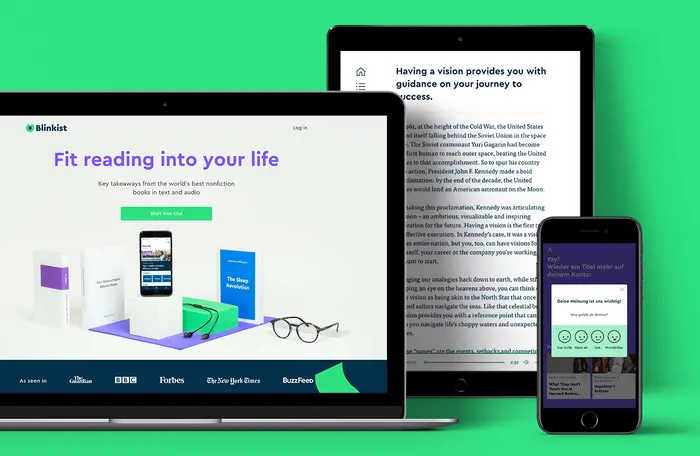
Image of laptop, tablet, and smart phone with different views of the Blinkist app displayed in front of a solid lime green background.
Fit reading into your life…I’ll try.

In an effort to compliment this self-taught wave I’m on, and to make myself write more, I’m going to summarize the books I’ve Blinked through and post summaries a couple times a week. Or that’s the plan anyway.

Today, we’ll start with Alchemy: The Dark Art and Curious Science of Creating Magic in Brands, Business, and Life by Rory Sutherland. 

Alchemy book cover

For an abridged version, I took away a lot of insights. It main theme is that unconventional thinking from marketers and sales teams can lead to breakthroughs – and highlights the importance of not dismissing an idea because it goes against data or the logical choice. Psychology and psycholophysics (the study of how perception varies from person to person) also found their ways into the stories and examples described.

There were a lot of interesting examples given in the Blinks to support this theory. The first was the notion that employers need to give employees more time off to increase productivity (as opposed to the idea of making them work harder/longer hours). With so much conversation happening today around hybrid work environments and productivity, this idea seemed a little antiquated; however, it got the message across.

Photo of a bearded man sitting on a sofa on his laptop. He's casually reclining with the laptop balanced on his knee - showing that he's not being productive at working at home or in hybrid environments.
Photo by Nataliya Vaitkevich on Pexels.com

The flip side of the argument gets raised a lot in the HR communities too – saying that companies offering unlimited time off end up with staff taking less vacation than if they had an allotted amount to use up. 

The overall idea of perception and how it can differ in reality depending on the person and circumstance was applied to unconventional thinking in the later blinks. The first example described how in the 1990s, consumers of Cadbury chocolates complained that the chocolate tasted different than it did before – even though there had been no change made to the recipe. What changed was the shape of the chocolate bar – and even though nothing with the formula changed to impact the taste, it’s what people thought.

One study explained how a certain train line needed rerouting. This would end up increasing the commute time by 20 minutes. Studies warned that the extension would upset customers and risk millions of dollars.

Given the change had to happen, the operator looked in other places. Something still in their control was the experience. The train operator improved the customer experience and the longer travel time problem went away.

That tracks for me. A 16-hour flight in business class from Sydney to Dallas will literally fly by but a 55 minute domestic flight in coach will last an eternity.

Commuters may not like the longer wait times, but let them charge their iPhones for free and they are happy.

Photo of the entire of Japan's bullet train first class
Interior of Japanese bullet train, first class
Photo from ExecutiveTraveller.com

Amazon found this too when testing how shipping charges harmed sales. Customers would abandon their orders if they had to pay for shipping. That is how Amazon Prime was born.

Customers would prefer to add more items into their shopping carts if it meant that they didn’t have to pay the fee. It goes against conventional wisdom that customers would want to spend more money. But their issue wasn’t the price, it was the principle of paying for shipping.

The idea of vagueness and uncertainty and how it impacted customers using Uber for ride sharing was mentioned too. The Uber example found that that just by adding a feature to see where your driver was, it would reduce the uncertainty and angst, thus overall improving the experience. The overall wait times didn’t change at all – just people’s attitudes towards the waiting had and a more positive sentiment was the result.

What the Blinks don’t go into is how to think from a psychological perspective to unlock these unconventional, but potentially impactful ideas. Whether it was Cadbury chocolate or product engineers at Uber HQ, it still seems like these ideas would need to go through focus groups, user experience research, client interviews, and lots of testing. In marketing, we spend so much time trying to understand our customers, find the ideal customers, do usability testing to improve our products and services, and uncover data to make our marketing strategy really perform.

Once a company pours so much time and money into doing this type of research, it seems unlikely that they’d be willing to ignore the data to go with an unconventional hunch…but I guess that’s the point.

Overall, I enjoyed this one.

The notion of embracing unconventional ideas is something I can really get behind. My main takeaway would be to schedule time to step away from something you’re trying to figure out. Take a moment to look at the problem from a psychological point of view.

Try something different. There could be magic hiding in the land beyond your buyer personas and audience profiles. And that magic is what is going to help make your marketing and branding efforts perform.

Chapter 2. Hiring: Amazon’s Unique Bar Raiser Process

From Working Backwards: Insights, Stories, and Secrets from Inside Amazon

Leaders raise the performance bar with every hire and promotion. They recognize exceptional talent, and willingly move them throughout the organization. Leaders develop leaders and take seriously their role in coaching others. We work on behalf of our people to invent mechanisms for development like Career Choice.

From Amazon’s Core Leadership Principle, Hire and Develop the Best

Amazon has 14 core leadership principles. Number six on the list is Hire and Develop the Best. In order to achieve this, Amazon has instituted key policies to eliminate urgency and personal biases and aim higher with designated ‘Bar Raisers’ in the interview process.  

From the start, Amazonians lean on the Bezos mantra of wanting ‘missionaries, not mercenaries.’ They want a process to identify people who are bought into the long-term vision of Amazon, and not the typical Silicon Valley tech bros that jumps from company to company. 

This impacts the culture and has helps scale their recruitment process. The authors share several anecdotes about how this mantra has protected the culture during several of its high growth phases (from 100 employees to 500 in a year to nearly a million employees today)! 

Who are the Bar Raisers?

The Bar Raisers are an elite group of interviewers at Amazon, armed with additional interview training, an impartial view, and ultimate veto power. They hold their own interview session with the candidates and lead debrief meetings with all interviewers and the hiring manager afterwards – ensuring that all of the information is shared and carefully considered. If the group cannot come to an unbiased, acceptable decision, the Bar Raiser vetoes the candidate, no questions asked (though this rarely happens). 

Within Amazon’s organisation, the Bar Raiser title is highly coveted. Even though they don’t receive any extra compensation for their services, they are acknowledged with a badge on their internal company profile. This black ops team of interviewers no doubt holds Amazon dear to their hearts and can easily weed out the mercenaries from the missionaries. They help protect the company culture and ensure the core leadership values are prioritized. 

The hiring process: 

The hiring process at Amazon doesn’t seem too far off the mark from other companies. It is not followed 100% the same for every role, but is used as a guide and tweaked as necessary.

The hiring process and owners look like this:

  1. Job description – hiring manager
  2. Resume review – recruiter
  3. Phone screen – recruiter
  4. In-house interview – 5-7 people, trained in company’s interview policies, no one more than one level below the position)
  5. Written feedback – done by all interviewers immediately after interview, no exceptions
  6. Debrief/Hiring meeting – led by the Bar Raiser
  7. Reference check – as needed
  8. Offer thorough onboarding – hiring manager

A few things that jumped out at me: 

  • Hiring managers are often in a hurry to get a position live, so they use out of date or inaccurate job descriptions – which often slows down the hiring process and creates confusion for recruiters and candidates.
  • During phone screens, if the person screening is on the fence, Amazon doesn’t recommend moving them to an in-house interview. The logic here is often people who raise questions at that stage won’t get the job and it ends up wasting time for the interviewers and the candidates. 
  • They recommend not allowing employees to interview potential managers. This creates an uncomfortable situation for the person being interviewed and potential problems if the employee votes against the person and they are hired on (as their manager) anyway. 
  • They treat everyone with respect – whether qualified or not – because they are potential customers and lead generators. 
  • In the offer stage, they recommend continuing to court the person while they make their decision to join Amazon or not. 

Final thoughts: 

The Amazon way of hiring has a lot of benefits. The hiring process is time consuming and expensive. Hiring managers often want positions filled immediately and don’t take the necessary steps required to hire the right people. From there, urgency bias kicks in and any chance of getting back on course is slim. The inclusion of the Bar Raisers is a way to circumvent that whole process and keep everyone honest. 

I’ve made several of these errors, and I suspect others have too. I ‘Frankensteined’ a job description together to get it live, moved people along when I wasn’t sure they’d be a good fit, waited more than 24 hours to write my notes, and interviewed potential future managers. Recruitment and hiring is difficult but Amazon is on to something – ensuring they’re finding the right people and saving time and money while they’re at it. 

This was a great chapter and I got a lot from it – I’m excited to press on with this book.