
Tag Archives: book review

Finding magic in unconventional places

Key Takeaways from Alchemy: The Dark Art and Curious Science of Creating Magic in Brands

I’m on a real learning kick lately, stemming from my current status of being unemployed. Over the past two weeks, I’ve completed 4 online certifications, subscribed to maybe nine or ten newsletters on everything from crypto to writing tips, and am trying to self team myself the art of SEO and website design. 

Among the tools I’ve employed in my unemployment are: Canva, Semrush, Grammarly, WordPress, and I’ve also resubscribed to Blinkist, for the third time. I’ve had a love/hate relationship with Blinkist. Love the idea of it, hate listening to people give summaries of the books.

But, a way to absorb an entire book in 20 minutes? I’ll give it a shot …again. 

Image of laptop, tablet, and smart phone with different views of the Blinkist app displayed in front of a solid lime green background.
Fit reading into your life…I’ll try.

In an effort to compliment this self-taught wave I’m on, and to make myself write more, I’m going to summarize the books I’ve Blinked through and post summaries a couple times a week. Or that’s the plan anyway.

Today, we’ll start with Alchemy: The Dark Art and Curious Science of Creating Magic in Brands, Business, and Life by Rory Sutherland. 

Alchemy book cover

For an abridged version, I took away a lot of insights. It main theme is that unconventional thinking from marketers and sales teams can lead to breakthroughs – and highlights the importance of not dismissing an idea because it goes against data or the logical choice. Psychology and psycholophysics (the study of how perception varies from person to person) also found their ways into the stories and examples described.

There were a lot of interesting examples given in the Blinks to support this theory. The first was the notion that employers need to give employees more time off to increase productivity (as opposed to the idea of making them work harder/longer hours). With so much conversation happening today around hybrid work environments and productivity, this idea seemed a little antiquated; however, it got the message across.

Photo of a bearded man sitting on a sofa on his laptop. He's casually reclining with the laptop balanced on his knee - showing that he's not being productive at working at home or in hybrid environments.
Photo by Nataliya Vaitkevich on Pexels.com

The flip side of the argument gets raised a lot in the HR communities too – saying that companies offering unlimited time off end up with staff taking less vacation than if they had an allotted amount to use up. 

The overall idea of perception and how it can differ in reality depending on the person and circumstance was applied to unconventional thinking in the later blinks. The first example described how in the 1990s, consumers of Cadbury chocolates complained that the chocolate tasted different than it did before – even though there had been no change made to the recipe. What changed was the shape of the chocolate bar – and even though nothing with the formula changed to impact the taste, it’s what people thought.

One study explained how a certain train line needed rerouting. This would end up increasing the commute time by 20 minutes. Studies warned that the extension would upset customers and risk millions of dollars.

Given the change had to happen, the operator looked in other places. Something still in their control was the experience. The train operator improved the customer experience and the longer travel time problem went away.

That tracks for me. A 16-hour flight in business class from Sydney to Dallas will literally fly by but a 55 minute domestic flight in coach will last an eternity.

Commuters may not like the longer wait times, but let them charge their iPhones for free and they are happy.

Photo of the entire of Japan's bullet train first class
Interior of Japanese bullet train, first class
Photo from ExecutiveTraveller.com

Amazon found this too when testing how shipping charges harmed sales. Customers would abandon their orders if they had to pay for shipping. That is how Amazon Prime was born.

Customers would prefer to add more items into their shopping carts if it meant that they didn’t have to pay the fee. It goes against conventional wisdom that customers would want to spend more money. But their issue wasn’t the price, it was the principle of paying for shipping.

The idea of vagueness and uncertainty and how it impacted customers using Uber for ride sharing was mentioned too. The Uber example found that that just by adding a feature to see where your driver was, it would reduce the uncertainty and angst, thus overall improving the experience. The overall wait times didn’t change at all – just people’s attitudes towards the waiting had and a more positive sentiment was the result.

What the Blinks don’t go into is how to think from a psychological perspective to unlock these unconventional, but potentially impactful ideas. Whether it was Cadbury chocolate or product engineers at Uber HQ, it still seems like these ideas would need to go through focus groups, user experience research, client interviews, and lots of testing. In marketing, we spend so much time trying to understand our customers, find the ideal customers, do usability testing to improve our products and services, and uncover data to make our marketing strategy really perform.

Once a company pours so much time and money into doing this type of research, it seems unlikely that they’d be willing to ignore the data to go with an unconventional hunch…but I guess that’s the point.

Overall, I enjoyed this one.

The notion of embracing unconventional ideas is something I can really get behind. My main takeaway would be to schedule time to step away from something you’re trying to figure out. Take a moment to look at the problem from a psychological point of view.

Try something different. There could be magic hiding in the land beyond your buyer personas and audience profiles. And that magic is what is going to help make your marketing and branding efforts perform.

Chapter 2. Hiring: Amazon’s Unique Bar Raiser Process

From Working Backwards: Insights, Stories, and Secrets from Inside Amazon

Leaders raise the performance bar with every hire and promotion. They recognize exceptional talent, and willingly move them throughout the organization. Leaders develop leaders and take seriously their role in coaching others. We work on behalf of our people to invent mechanisms for development like Career Choice.

From Amazon’s Core Leadership Principle, Hire and Develop the Best

Amazon has 14 core leadership principles. Number six on the list is Hire and Develop the Best. In order to achieve this, Amazon has instituted key policies to eliminate urgency and personal biases and aim higher with designated ‘Bar Raisers’ in the interview process.  

From the start, Amazonians lean on the Bezos mantra of wanting ‘missionaries, not mercenaries.’ They want a process to identify people who are bought into the long-term vision of Amazon, and not the typical Silicon Valley tech bros that jumps from company to company. 

This impacts the culture and has helps scale their recruitment process. The authors share several anecdotes about how this mantra has protected the culture during several of its high growth phases (from 100 employees to 500 in a year to nearly a million employees today)! 

Who are the Bar Raisers?

The Bar Raisers are an elite group of interviewers at Amazon, armed with additional interview training, an impartial view, and ultimate veto power. They hold their own interview session with the candidates and lead debrief meetings with all interviewers and the hiring manager afterwards – ensuring that all of the information is shared and carefully considered. If the group cannot come to an unbiased, acceptable decision, the Bar Raiser vetoes the candidate, no questions asked (though this rarely happens). 

Within Amazon’s organisation, the Bar Raiser title is highly coveted. Even though they don’t receive any extra compensation for their services, they are acknowledged with a badge on their internal company profile. This black ops team of interviewers no doubt holds Amazon dear to their hearts and can easily weed out the mercenaries from the missionaries. They help protect the company culture and ensure the core leadership values are prioritized. 

The hiring process: 

The hiring process at Amazon doesn’t seem too far off the mark from other companies. It is not followed 100% the same for every role, but is used as a guide and tweaked as necessary.

The hiring process and owners look like this:

  1. Job description – hiring manager
  2. Resume review – recruiter
  3. Phone screen – recruiter
  4. In-house interview – 5-7 people, trained in company’s interview policies, no one more than one level below the position)
  5. Written feedback – done by all interviewers immediately after interview, no exceptions
  6. Debrief/Hiring meeting – led by the Bar Raiser
  7. Reference check – as needed
  8. Offer thorough onboarding – hiring manager

A few things that jumped out at me: 

  • Hiring managers are often in a hurry to get a position live, so they use out of date or inaccurate job descriptions – which often slows down the hiring process and creates confusion for recruiters and candidates.
  • During phone screens, if the person screening is on the fence, Amazon doesn’t recommend moving them to an in-house interview. The logic here is often people who raise questions at that stage won’t get the job and it ends up wasting time for the interviewers and the candidates. 
  • They recommend not allowing employees to interview potential managers. This creates an uncomfortable situation for the person being interviewed and potential problems if the employee votes against the person and they are hired on (as their manager) anyway. 
  • They treat everyone with respect – whether qualified or not – because they are potential customers and lead generators. 
  • In the offer stage, they recommend continuing to court the person while they make their decision to join Amazon or not. 

Final thoughts: 

The Amazon way of hiring has a lot of benefits. The hiring process is time consuming and expensive. Hiring managers often want positions filled immediately and don’t take the necessary steps required to hire the right people. From there, urgency bias kicks in and any chance of getting back on course is slim. The inclusion of the Bar Raisers is a way to circumvent that whole process and keep everyone honest. 

I’ve made several of these errors, and I suspect others have too. I ‘Frankensteined’ a job description together to get it live, moved people along when I wasn’t sure they’d be a good fit, waited more than 24 hours to write my notes, and interviewed potential future managers. Recruitment and hiring is difficult but Amazon is on to something – ensuring they’re finding the right people and saving time and money while they’re at it. 

This was a great chapter and I got a lot from it – I’m excited to press on with this book. 

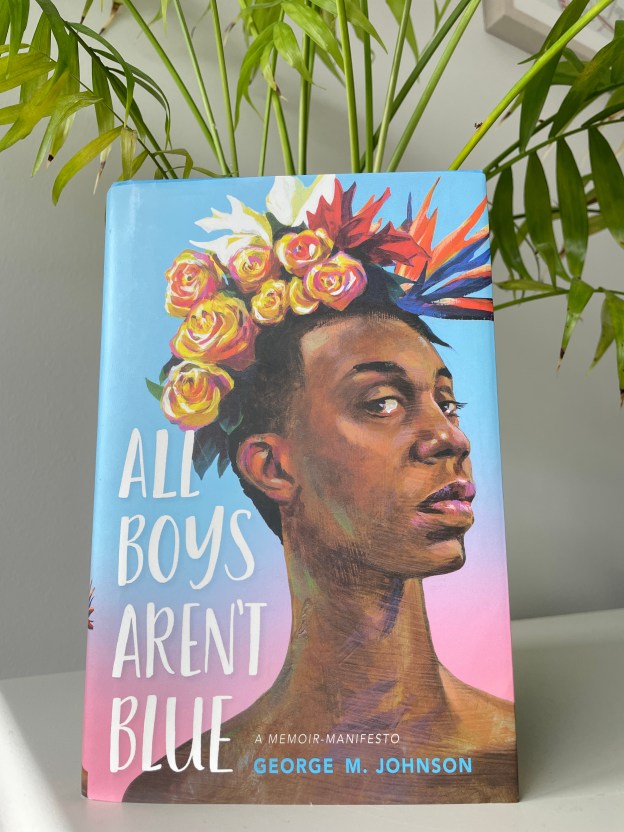
Book Review – All Boys Aren’t Blue

QUICK TAKE: This book is great and I wish I read it in high school. Hearing one story after another about a fledgling gay, surviving in the closet during his teenage years, and coming out of the closet during his college years would’ve helped me feel less alone during those times.

George M. Johnson classifies this book as a memoir-manifesto and he uses that broad genre to work out a variety of life events – being queer and being Black – but also dealing with family, community, self-discovery, shame, trauma, personal growth, and advocacy. 

The focus on advocacy tied it all together for me. Johnson wanted to create something for kids to find, so they can learn and connect from his experiences and know that being queer and being Black are not things to hide away.

“Oddly enough, many of us connect with each other through trauma and pain: broken people finding other broken people in the hopes of fixing one another.”

What ended up happening instead was parents across the United States found the book and started banning All Boys Aren’t Blue from school libraries. This ended up being quite the story, skyrocketing the book’s popularity. That’s when I came across it – from seeing all the commotion on #booktwitter.

When I was a teenager in the early 2000s, I read strangers’ blogs who were dealing with the same things as me, the same things the target audience in this book deal with today. Light themes like – facing the terror that you are going to die because you’re gay – by disease, by someone else’s hands, or by your own hands. Hearing others’ stories about things you are dealing with helps you feel connected and supported. When you feel that you are dealing with something all on your own, being able to see how someone else navigated the same things is powerful. And now, 20 years later, having a book published with these stories is still found controversial, it’s shocking. 

The greatest tool you have in fighting the oppression of your Blackness and queerness and anything else within your identity is to be fully educated on it.

If you are a teenager who is seeking connection and wanting to hear an interesting story about Johnson’s journey, pick up this book. If you are beyond those years, do what you can to amplify the message so someone who needs to hear these stories can find it or contribute to a cause that can do that for you.

Support trans kids: crooked.com/tent

Book Review – Tellermoon

For a genre that I watch a lot more of than I read (I think this was actually my first book like this to read), I was just as captivated in Tellermoon as if I were watching it on tv.

There were a lot of elements that seemed familiar. The combination of the complex characters and political story lines from Battlestar Galactica, mixed with a young-crew-in-training-having-to-take-control like Starship Troopers, and layered on top of it a manipulative, self-serving evil corporation manipulating everything in the background a la Dune – is where I found myself with Tellermoon

Lee added his own special element to the combination by making the characters feel like real people. In addition to dealing with all the ‘space stuff,’ the crew of the Tellermoon was constantly checking their social media feeds, navigating calculating parents, getting annoyed when the wifi wasn’t working, and wondering if that boy (or alien) likes them. 

For book club, there’s a ton to unpack. Political power grabs, conspiracy theorists, imposter syndrome, and tensions between Earthlings and Thorins gives you plenty of fodder for discussion.  

Tellermoon was a quick read that pulled me in, kept me interested and left me wanting more adventures (which I hear there are more to come). The characters were fun, the story was punchy, and it made me think about how I would react if my spaceship was under attack (spoiler: probably not as well as these folks did).  

I recommend. Go buy it here!

Book Review – To Paradise

To Paradise will break your heart by highlighting humanity’s weaknesses over three hundred years.

It’s a book made for a book club. Begging to be discussed. Those who love to dive into the themes of time, progress, hope, relationships, fear, and politics will have plenty to mull over. It offers commentary on the state of the world but remains detached through the fiction. Each jerk forward in time produces a chasm that the reader feels compelled to fill in. At times the lack of resolutions are frustrating.  The unexplained details whisper questions throughout the novel and I found the things Yanagihara left to be the loudest. 

The first section of the book takes place in 1894. Here there is an alternate history of North America, where the continent is fractured into multiple colonies and unions – with New York being a part of The Free States – a place where racial freedom persists, as well as freedom of sexuality. The implications of this swap in history immediately grabbed my attention but is glossed over as the characters and their wealthy lives take over. With gender not being an issue with who you love, we are presented with class and wealth filling the void, and insecurity, alway insecurity. 

In part two, we pick up in 1994 in the same townhome that we entered in part one, but with a different gay couple. Here we are faced with the struggles of a wealthy older man and his younger, less successful partner. The older man entertains and cares for his friends who are succumbing to AIDS, while the younger one tries to find his place in his partner’s world, while secretly deconstructing his childhood trauma’s created by his mentally-unwell father. 

As the book ends, we are in future New York City. Global warming has forced everyone into wearing cooling suits to go outside. Sexual freedom has been pushed into the closet, for the first time there in 200 years. Government oppression, global pandemics, fake news, supply chain shortages, and isolationism take center stage – not too much of a stretch from today. A man’s love is shown to his granddaughter and his best friend through a series of actions and letters. Each vignette illustrates the man trying to cope with the responsibility he bears from creating this hostile world that is trying to destroy them. 

To Paradise was very different to A Little Life (Yanagihara’s previous novel which made me openly sob). It reminded me of Cloud Atlas in terms of structure and style – but instead of vague allusions to reincarnation, we are connected over the centuries by loosely related characters all struggling to overcome something in order to find their own escape to paradise. 
While reading, I’d think, “This is definitely my least favorite part so far,” only to return in awe by the ideas it challenged in the end. The way the past and future echo each other throughout each section gives the reader a unique perspective, an omnipresent context, that focuses the themes of the novel. Yanagihara is a brilliant writer. My copy of To Paradise is marked up by so many passages underlined so I can read them over again. The novel is not short. At 704 pages it’s daunting, but the way it flows, I was able to read it in less than 10 days.

I’d recommend this book.

Rating: 5 out of 5.

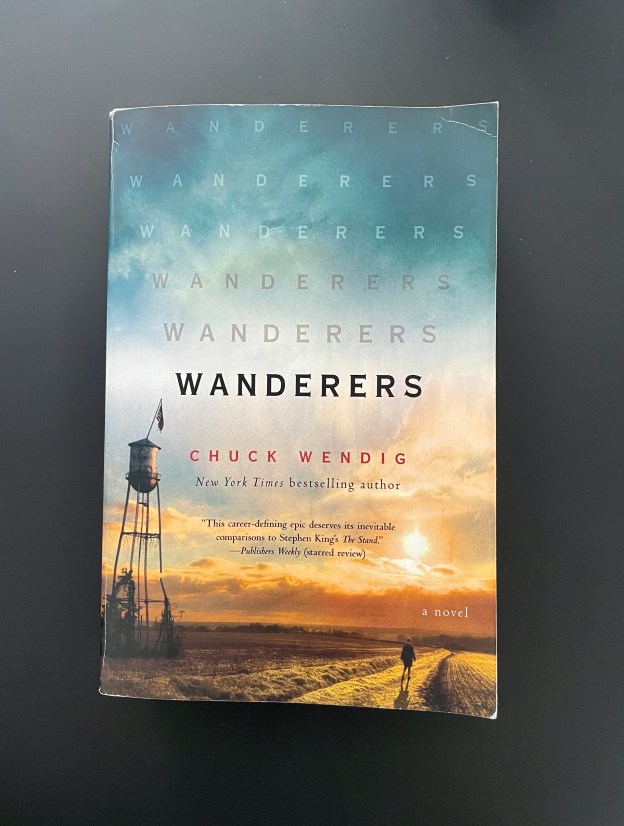
Book Review – Wanderers

Wanderers by Chuck Wendig

My rating: 5 of 5 stars

I’m a bit late to the party with Wanderers. I came across it mid-2021 and it sat at the bottom of my to-read pile for six months. Whether it was the 780 pages that put me off, or the real-world weariness of reading something about a global pandemic, who’s to say, but I would recommend anyone who is on the fence about this book to dive in.

I found Wanderers incredibly fun to read – especially if you enjoy books in the Stephen King or Michael Crichton genres. Its story is fast-paced and the chapters are short, making it a quick read in spite of its girth. It’s the science, mixed with the fiction, that makes this brand of horror even scarier – you could believe this could happen.

But, if you’re concerned, this book won’t trigger any PTSD from the current coronavirus pandemic; even though, almost prophetically, that word does pop up in a scene at the CDC headquarters. Given this was written in 2019, it makes it even more chilling.

Initially, reading the back cover, I was a little turned off by the character descriptions. “A decadent rocker, religious radio host, and a teenage girl”…pass. Almost immediately though, I found all of the characters compelling, and even likable, in each of their own, flawed, ways. Two pivotal characters missing from the cover description are Benji, the disgraced former CDC director, and Black Swan, the sentient computer. Their addition, along with the sadistic junkyard owner (who definitely would have stormed the Capital in real life) and former cop with a metal plate in her head, improve the story rather than distract from it. I never found myself wanting to get through one’s storyline faster to get to another. They each offered something thought provoking – whether it being true to yourself, questioning your beliefs, healing from trauma, or doing what you think is right for the greater good at extreme cost.

At this point in our own pandemic, you’ll be able to relate to society’s collapse. You’ll recognize the polarizing responses people have during crisis and uncertainty. You’ll be able to picture the decadent rocker, hear the religious radio host, and feel for the teenage girl.

Wanderers packs a lot in and leaves you wanting more. Thankfully, the end of the book tosses in a few major twists and sets things up nicely for a sequel (cue Wayward, which comes out in August 2022

I’d recommend this book.


View all my reviews

Book Review- Cultish: The Language of Fanaticism

Cultish: The Language of Fanaticism by Amanda Montell

My rating: 4 of 5 stars

Cultish is a book about the language used by people and on people in cults. It was an easy read and opened my eyes to a lot of moments in life, that upon more careful observation could be deemed very suspicious.

The book is organized into six parts. The first gives an introduction into the concept of language and the how and the why certain words and turns of speech are used to lure people into feeling accepted by groups. Parts two and three expand on cultish organizations that center around making you feel like you can ascend to another level above humanity and how language is manipulated – especially by the likes of Scientology and other pseudo-religious organizations. There were a lot of things I had already come across in podcasts and documentaries, but it would probably be amiss to write a book on cults and omit some of the most glaring examples. I did take away some elements of Heavens Gate and Scientology that I had never heard.

The second half of the book was the most interesting to me. It focuses on multi-layer marketing and how that has evolved from Tupperware parties to stay-at-home moms wanting to sell leggings. It segues into how religion is being replaced by cultish fitness clubs and how cults can thrive in the realm of social media. I enjoyed this because I could relate to it the most. It basically says as much with statements like, “The audience to which ‘cult fitness’ primarily caters– urban dwelling millennials with income to spare – overlaps quite precisely with the contingency that has renounced traditional religion.” I’ve seen the #bossbabes in my social feeds and have seen how certain ‘influencers’ can hijack someone’s beliefs.

The examples provided throughout the entire book were interesting and easy to understand. The one thing I didn’t like (and is a personal pet peeve) occurred mostly in the beginning of the book. There was a lot of content briefly mentioned and then hinted that it would be followed up later in the book. More on that in chapter 5, but you’ll hear more about that when I talk about X, which we’ll get into later, etc etc. This popped up a lot in the front half almost to the point of being distracting.

There was a lot to take away from this book, especially in the second half. It got me thinking how many times I’ve brushed up against cult-like organizations – or even how non-cult organizations that utilize the same linguistic tricks- and managed to come out unscathed (Texas A&M University, Landmark Worldwide, Barrys Bootcamp, even the gay community to some extent). My takeaway from this book is that language is incredibly powerful and can be manipulated if you’re not paying attention.

I’d recommend this book.


View all my reviews